Loading...
Serving Enid, OK and surrounding areas. (580) 366-4082
Enid's clay soil shifts with every season. Get concrete footings dug to the right depth, sized for local conditions, and inspected before the pour.
Concrete footings in Enid are the underground base that holds up everything above them - a porch, addition, garage, or covered structure - by spreading the building's weight across a wider area of soil so the structure does not sink or shift over time, with most residential footing projects taking two to five days from digging through initial curing.
If you are adding onto your home, replacing an outbuilding, or building any covered structure, footings are what keep your new work stable after the first few rounds of Oklahoma weather. In Enid, the clay soil that expands and contracts with every wet and dry cycle is what makes proper footing design matter more here than it might in other parts of the country. For projects that need a full slab base rather than just pier or strip footings, our foundation installation service covers the full scope of foundation systems for new construction and major additions.
Any time you add a room, enclose a porch, build a garage, or put up a covered structure, you need new footings to support it. If you are building something new that will be attached to or near your home, footings are part of the job from the start - not an optional add-on you can skip and hope for the best.
In Enid's older neighborhoods, sticking doors and diagonal cracks above window corners are often the first visible sign that a footing has shifted. Enid's clay soil swells and shrinks with the seasons, and when the ground beneath a footing moves, the structure above moves with it. These symptoms are worth having a contractor look at before the gap or crack gets bigger.
If a concrete porch slab, set of steps, or small addition has visibly separated from the main house - even by a quarter inch - the footing underneath has likely shifted. This is especially common in Enid after a dry summer followed by heavy fall rains, when clay soil goes through a rapid wet-dry cycle. Left alone, the gap will continue to grow.
Vertical cracks can be normal settling. Diagonal cracks - especially ones wider at one end than the other - suggest uneven movement, which often points to a footing problem underneath. If you see this pattern on a garage wall, foundation wall, or exterior step, get a professional opinion before the damage progresses.
We pour footings for additions, garages, covered patios, pergolas, and replacement outbuildings throughout Enid and the surrounding area. Every project starts with a site visit - we look at what you are building, where it is going, and what the soil looks like before we put a number in front of you. For projects where the footings will tie into an existing older structure, we assess what is already there first, because tying new work into a compromised footing transfers the problem rather than fixing it. If you also need foundation raising on an existing structure before the new work begins, we can coordinate both so you are not managing separate crews and separate schedules.
We pull the City of Enid building permit before any digging starts and schedule the city inspection at the correct stage - before the pour, not after. That inspection is an independent check that the depth and dimensions meet code. You cannot see any of this once it is buried, which is exactly why having an inspector look before the concrete goes in matters. The Oklahoma Construction Industries Board licensing requirement means you can verify any contractor's standing before signing anything.
Suits homeowners adding a room, sunroom, or enclosed porch to an existing mid-century home where new footings must tie into older construction.
Ideal for detached garages, workshops, and accessory structures that need properly sized, permit-ready footings before framing begins.
Best for homeowners building a covered outdoor structure where concrete pier footings anchor posts below the frost line.
Suited to older Enid properties where an outbuilding or garage was built on minimal footings and needs to be rebuilt on a proper base.
Enid sits on Garfield County's clay-heavy soil, and that soil's expansion and contraction cycle is the single biggest challenge for structural footings in this area. Footings that were not designed for local conditions can shift enough to crack walls, jam doors, and pull structures apart over the course of several wet and dry seasons. The frost depth in north-central Oklahoma is generally around fourteen to eighteen inches, meaning footings have to be dug below that level to avoid frost heave - the process where freezing ground pushes a footing upward and cracks whatever is built on top of it. The International Code Council building codes that Enid uses are designed with these conditions in mind, and working to code here is genuinely protective - not just paperwork.
A significant share of Enid's housing stock was built between the 1920s and 1960s, and homeowners in those neighborhoods regularly need new footings when adding onto a home or rebuilding a deteriorating garage. We work with property owners throughout this region, including customers in Kingfisher, OK and Perry, OK where the same clay soils and older housing stock create the same footing challenges. Oklahoma's spring storm season is also worth building into your timeline - scheduling footing pours in late summer or early fall avoids the window when heavy rains can saturate the ground and delay or complicate outdoor concrete work.
We will ask what you are building and where, then come out to look at the site before giving you a number. The visit typically takes thirty to sixty minutes and covers what you are building, where it is going, and what the soil looks like. Expect a reply within one business day.
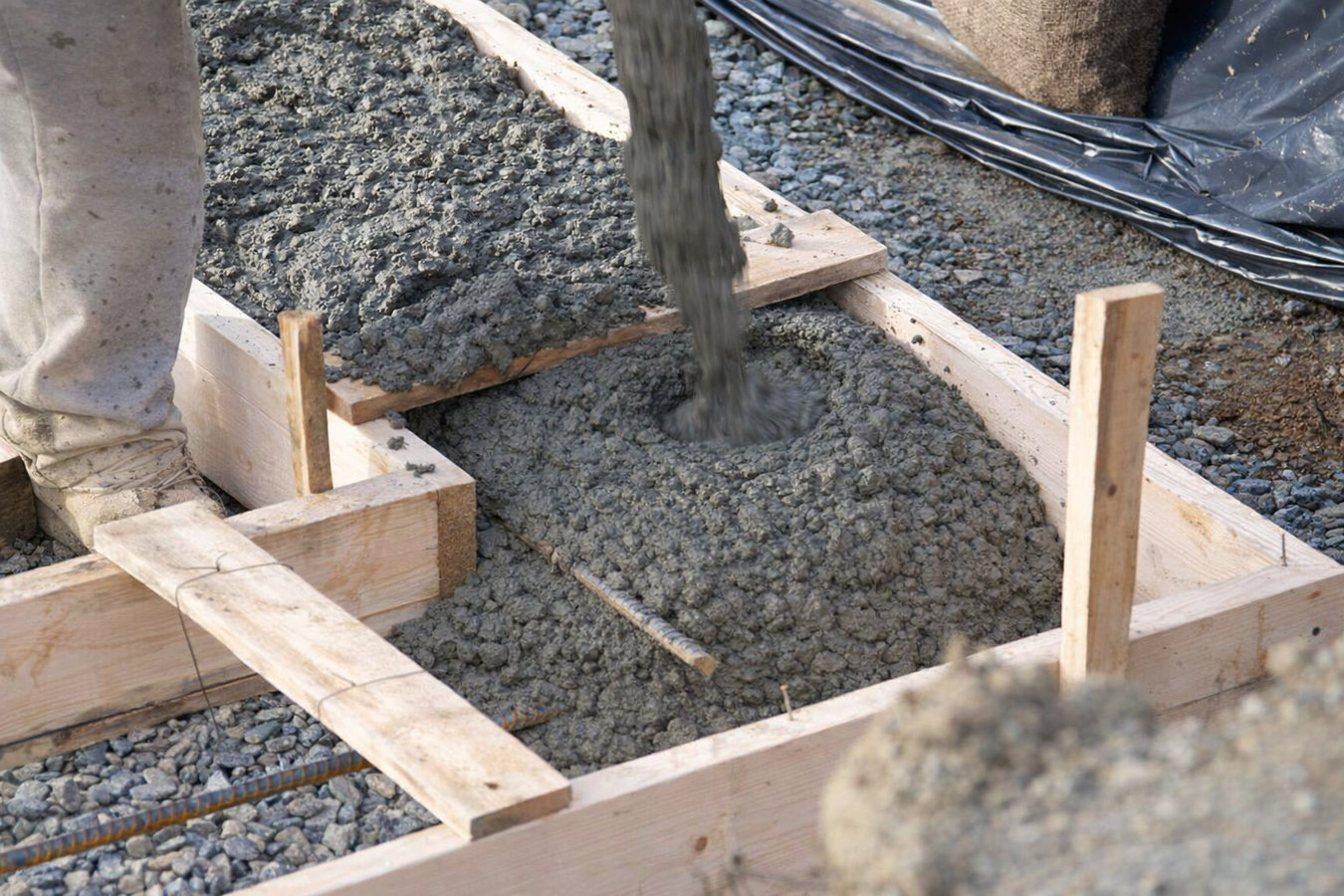
We submit the building permit application to the City of Enid before any digging starts - permit approval typically takes a few business days to a week. Once approved, the crew marks out footing locations, digs to the required depth, sets forms, and places any steel reinforcement inside.
In Enid, a city inspector checks the depth and dimensions of the excavation before the concrete goes in. We schedule this step - you do not have to do anything except be available if the inspector has questions. This is what makes the permit worth having: an independent reviewer confirms the work is correct before it gets buried.
The pour itself usually takes a few hours for a residential project. Fresh concrete must be left completely undisturbed for at least 24 to 48 hours and is ready to build on after about a week. We handle any final city inspection and backfill around the footing once it has cured enough to work around.
We walk the site, assess existing conditions, and give you a written price before any work starts. No guessing, no pressure.
(580) 366-4082North-central Oklahoma's clay soil expands and contracts with every rain and every dry spell, and footings that were not designed for it can shift and crack the structure above within a few years. We size and shape footings for local soil conditions - not just the minimum the code requires.
Unpermitted structural work is one of the most common deal-breakers in Oklahoma home sales. Every footing project we take on goes through the City of Enid's permit and inspection process so there is nothing buried in your yard that will surface as a problem when you sell. You get a clean paper trail that protects your investment.
A hard freeze within 24 hours of a pour or a summer heat wave during curing can both weaken fresh concrete. We watch the forecast before scheduling every pour and build weather buffer time into spring projects, when Enid's tornado season can delay outdoor work unexpectedly.
Many of Enid's mid-century homes have original footings that were not built to today's standards. Before we design new footings that tie into an existing structure, we assess what is already there and tell you honestly whether it can support your addition or needs to be addressed first. No guessing, no surprises after the work is done.
Footings are buried the moment the pour is done, which is exactly why the work done before the pour - the soil assessment, the depth, the inspection - matters so much. Getting it right the first time is always less expensive than finding out years later that a corner was cut.
For more on Oklahoma soil conditions and their effect on structural concrete, the Oklahoma Geological Survey and the American Concrete Institute both publish accessible guides on footing design and concrete construction in variable soil environments.
Lifting and leveling an existing foundation that has settled or shifted over time - restoring it to a stable, level position.
Learn MoreComplete foundation systems for new construction, including slab, crawl space, and full basement options.
Learn MoreLate summer and fall booking windows move quickly - reach out now and we will walk your site and give you a written estimate before the best weather window closes.