Loading...
Serving Enid, OK and surrounding areas. (580) 366-4082
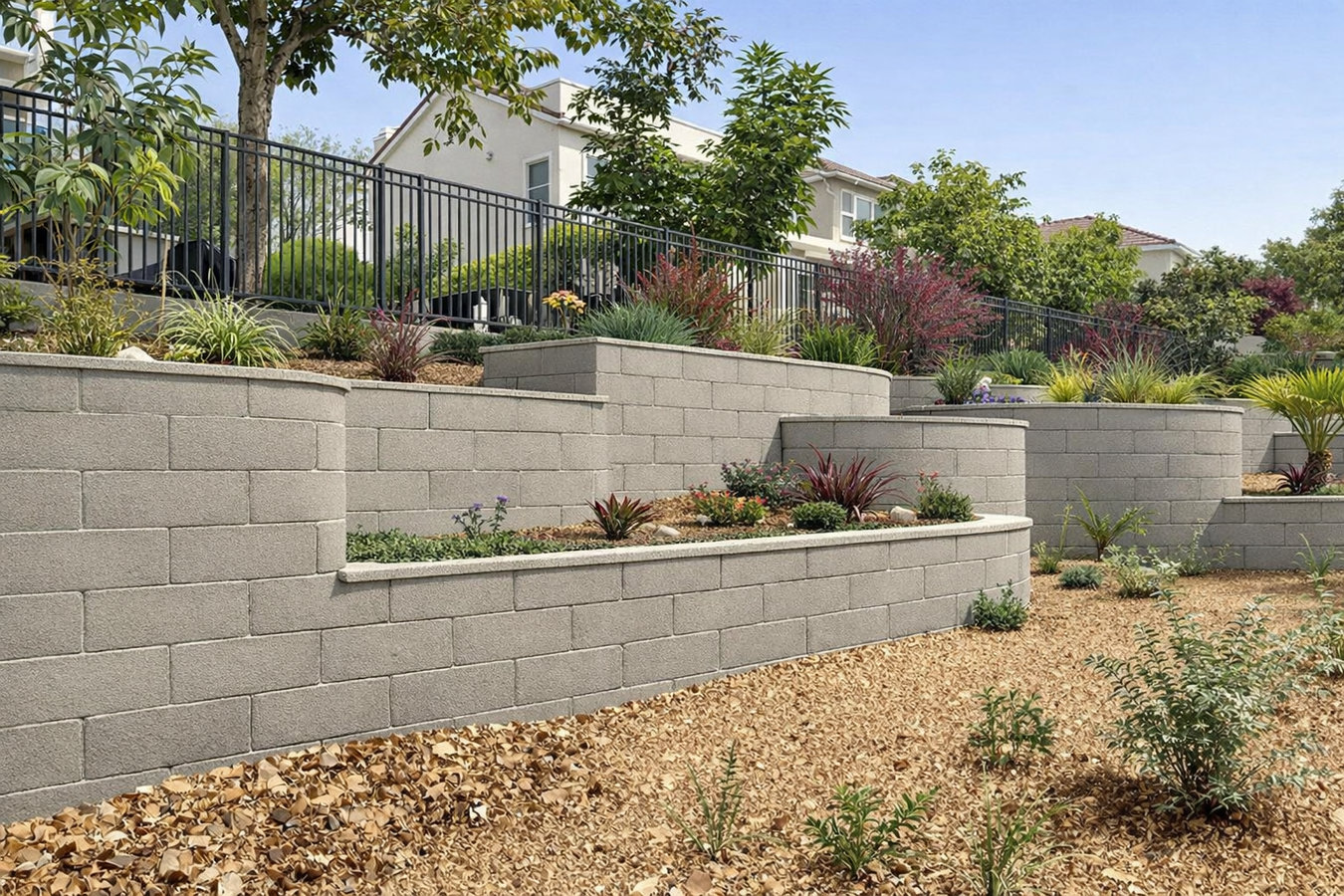
Enid's clay soil and wet springs erode slopes fast. Get a properly drained, frost-footed wall that holds - season after season.
Concrete retaining walls in Enid hold back soil on slopes and hillsides so it does not wash into your yard, driveway, or foundation - most residential projects take two to five days on-site, depending on wall length, height, and drainage work required.
If you have a sloped yard in Enid, you have probably watched the soil shift a little more every spring. The clay soil here swells with moisture and shrinks back in summer, and that cycle slowly destroys anything sitting on an unsupported slope. Concrete retaining walls give that movement somewhere to stop. If you are planning to create usable outdoor space on that slope, our concrete floor installation service works alongside a retaining wall to give you a level surface to build on.
Bare patches of dirt, small gullies, or soil piling up at the bottom of a slope after a spring storm are signs your yard is actively eroding. Enid's intense spring rains can move a surprising amount of soil in a single event, and once erosion starts it tends to accelerate each season.
A retaining wall tilting away from the slope it holds back is under more pressure than it was designed to handle. Horizontal cracks across the face of the wall are a warning that the wall is beginning to fail - this is not a cosmetic issue and should be evaluated before the next wet season.
If rainwater runs downhill and pools near your foundation, a retaining wall combined with proper grading can redirect that water away from your house. In Enid's clay soils, water sitting against a foundation causes serious damage over time.
A fence post leaning, a driveway edge crumbling, or soil pressing against the side of a garage means the ground is moving in a way that needs to be managed. A properly placed retaining wall stops that movement before it causes more expensive damage.
Every retaining wall project we take on is designed for what Enid's soil and weather actually throw at it. That means a footing set below the frost line, drainage built into the wall itself, and a concrete mix suited to northwest Oklahoma's temperature swings. For projects that involve leveling the ground around the wall, we can also handle concrete floor installation to complete the usable area. When the wall is part of a broader landscaping or structural plan, our team also builds concrete footings to support adjacent structures.
Whether you need a straightforward erosion barrier along a backyard slope, a tiered wall system, or a block retaining wall for a terraced garden, we size and design each wall for the specific load and drainage conditions on your property. We pull permits through the City of Enid before any digging starts and coordinate the inspection so you have documentation when the job is done.
Suits homeowners with eroding hillside yards or slopes that drain toward the house.
Ideal for creating flat, usable outdoor space on a sloped lot.
Best for properties where soil movement threatens a driveway edge, garage, or foundation.
Suited to homeowners whose existing wall is leaning, cracked, or failing under load.
Enid sits on clay-heavy soil throughout Garfield County that swells when wet and shrinks when dry. That constant movement puts extra stress on retaining walls, which means the footing and drainage design need to account for soil that is actively pushing and pulling against the wall through every wet and dry season. Add in Enid's freeze-thaw winters - where the ground can freeze and thaw multiple times in a single season - and a wall built without a properly deep footing will start to shift within a few years. Enid's heavy spring rainfall makes drainage behind the wall just as critical as the wall itself. Water trapped behind a retaining wall after a wet April or May can topple even a well-built structure.
We regularly build retaining walls for homeowners across the region, including customers in Alva, OK who deal with similar northwest Oklahoma clay conditions, and in Ponca City, OK where sloped residential lots and spring flooding create the same drainage challenges as Enid. Local experience with this soil and this weather is not a minor detail - it shapes every decision from how deep we set the footing to how we grade the drainage layer behind the wall.
The City of Enid requires a building permit for retaining walls over four feet tall, and older Enid neighborhoods often have mature trees and established underground utilities that require careful planning before any excavation begins. We handle all of that before a single shovel goes in the ground.
For more background on how drainage relates to soil movement in this region, the USDA Web Soil Survey covers Garfield County's soil classifications in detail.
We will ask about the length and height of the wall you need and what the slope looks like. Expect a reply within one business day and a free on-site visit scheduled shortly after.
We walk the slope, check soil drainage, and look for underground utilities. For walls over four feet, we discuss whether an engineer drawing is needed for the City of Enid permit.
We handle the permit application with the City of Enid before any work begins. This typically adds a week or two to the start date but protects your investment and keeps everything on record.
The crew sets a frost-depth footing, builds forms, places reinforcement, pours the wall, and installs the drainage layer behind it. Concrete needs at least seven days before the area is backfilled.
No pressure. We walk the yard, look at the slope, and give you a written number - no strings attached.
(580) 366-4082Every wall we build starts with a footing set below northwest Oklahoma's frost line. That detail alone is what separates walls that hold for decades from walls that start leaning after the first hard winter.
We install a drainage layer - gravel and perforated pipe - behind every wall we build. Enid's heavy spring rainfall means trapped water pressure is one of the most common reasons walls fail here, and we design around it from the start.
We handle the permit application with the City of Enid and coordinate the required inspection. You end up with documented proof that the work was reviewed - which matters if you ever sell your home. The Oklahoma Construction Industries Board sets the licensing standards we work to.
You get a written, itemized estimate before work begins. If anything changes during the project, we tell you before we act on it - not after. The number you agreed to is the number you pay.
Building retaining walls in Enid means building for clay soil, hard winters, and wet springs all at once. These four proof points reflect how we approach every project in this area - nothing is optional when the conditions are this demanding.
Level, solid concrete floors for garages, basements, and indoor spaces - a natural next step once your retaining wall creates a flat area.
Learn MoreDeep concrete footings for structures adjacent to your retaining wall, designed for Garfield County soil conditions.
Learn MoreSpring is the busiest season for concrete work in northwest Oklahoma - call now to lock in your spot before the schedule fills up.