Loading...
Serving Enid, OK and surrounding areas. (580) 366-4082
Enid's clay soils crack foundations that were not designed for them. Get a properly prepared, permit-ready slab that holds up season after season.
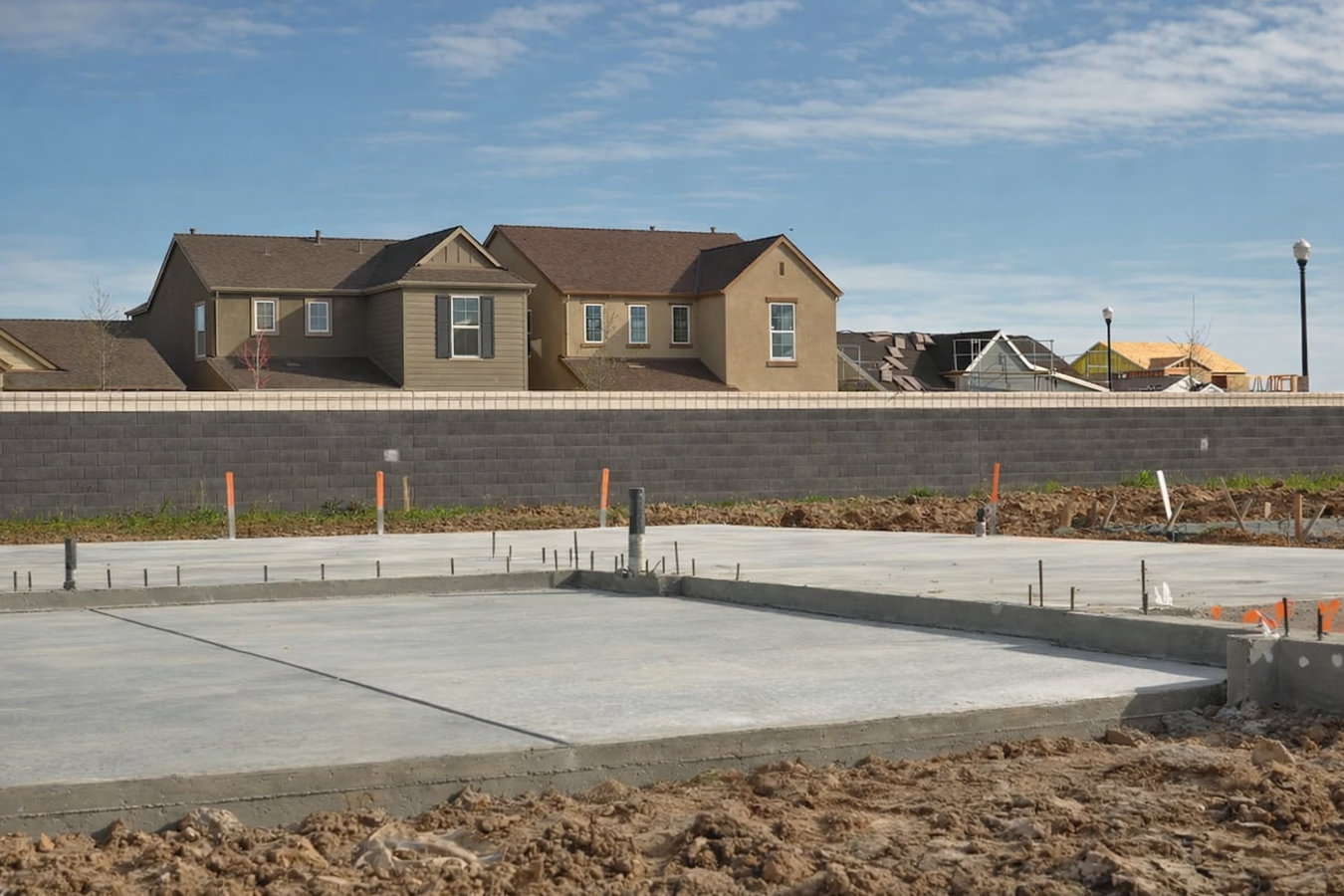
Slab foundation building in Enid involves grading and compacting the sub-grade, laying gravel and a moisture barrier, placing steel reinforcement, and pouring concrete to the required thickness - most residential projects take one week from permit approval to a pour-ready slab, with framing possible about a week after that.
If you are building a new home, adding a garage, or replacing a slab that has cracked and shifted over the years, the work underneath the concrete matters as much as the pour itself. Enid's clay soils are the single biggest factor separating a slab that lasts decades from one that starts showing problems within a few years. If your project includes structural posts or load-bearing walls, our foundation installation service covers the full scope of foundation systems for new builds and additions.
Small hairline cracks in concrete are common, but if you can fit a pencil tip into a crack, or if sections of your floor are no longer level with each other, the slab has moved significantly. In Enid, this is often tied to clay soil drying out over a hot summer and then swelling again after fall rains - a cycle that repeats every year and worsens existing damage.
When a slab shifts, the walls above it shift too. If interior doors that used to swing freely now drag on the floor, or if gaps are forming at the tops of door frames, the foundation beneath may be moving. This is a common complaint in older Enid neighborhoods where decades of soil movement have taken a toll on mid-century slabs.
If water consistently collects against the side of your house after heavy rain, it is soaking into the soil right next to your slab. Over time, that repeated wetting and drying weakens the soil support under the slab edge. Enid gets significant spring rainfall, and homes with poor grading around the foundation are especially vulnerable to this kind of edge erosion.
The most straightforward sign you need a slab foundation is that you are starting from scratch - a new home, a garage, a room addition, or an accessory dwelling unit. If there is no existing structure on the site, a slab is your starting point. In Enid, that means going through the city permitting process before any ground is broken.
Every slab we pour is designed for the specific conditions on your property - the soil type, the drainage pattern, and what the slab will carry. We coordinate with your plumber before the pour since any pipes running under the slab have to be in place before the concrete goes down. For projects that also need pier supports or load-bearing footings, we handle concrete footings as part of the same project so you are not managing two separate crews.
We pull the City of Enid building permit before any ground is broken and schedule the city inspector to check the forms and steel before the pour. That inspection is a benefit to you - it means someone working for the city, not your contractor, confirms the work is correct before the concrete goes in. We also handle full foundation installation for new builds that require crawl space walls or more complex structural systems.
Suits homeowners building a new residence on a bare lot, from small additions to full house footprints.
Ideal for detached garages, workshops, and accessory structures that need a properly prepared concrete floor.
Best for expanding existing homes where the new addition needs its own poured concrete base tied to the existing structure.
Suited to properties where an old or damaged slab needs to be removed and replaced with a properly reinforced pour.
Garfield County sits on clay-heavy soil that swells when wet and shrinks when dry. That cycle repeats every year - heavy spring rains, dry summers, wet falls - and a slab that was not designed with it in mind will crack and shift within a few years. Proper sub-grade compaction and a gravel base are not optional steps here, they are what separates a 50-year slab from one you are patching in five. Enid summers regularly hit 95 degrees and above, which means a pour scheduled for a July afternoon without a curing plan can end up weaker than it looks on the surface. We schedule pours during cooler hours in summer and take steps to slow surface drying during the critical curing window.
We work with homeowners throughout northwest Oklahoma, including customers in Perry, OK where similar clay soil conditions require the same attention to sub-grade preparation, and in Kingfisher, OK where new home construction on flat agricultural lots presents its own drainage challenges. Many of Enid's older neighborhoods also have underground lines running through lots that do not always match old utility maps - we call 811 before every job and build that step into the schedule. The American Concrete Institute sets the widely recognized guidelines for concrete mix design, curing, and quality control that our work is built on.
We will ask about the size of the slab, what it is for, and your lot conditions. Expect a reply within one business day and a free site visit scheduled shortly after. We assess soil and drainage before giving you a written quote.
We apply for the City of Enid building permit before any work begins. Once approved, the crew grades and compacts the sub-grade, lays gravel, installs the moisture barrier, and places the rebar or wire mesh inside the forms.
The concrete pour for a typical home slab takes one day. A ready-mix truck delivers the concrete, and the crew spreads, levels, and finishes the surface. The city inspector checks the forms and steel before we pour - you get a green light from an independent reviewer.
Concrete is safe to walk on within 24 to 48 hours, but framing should not begin for at least a week. We keep the surface moist during the critical early days, especially in Enid's hot summers. We walk the finished slab with you before closing out the job.
We walk your lot, assess the soil, and give you a written quote with no pressure and no surprises.
(580) 366-4082Enid's expansive clay soil shifts every wet and dry season, and a slab that was not designed with that in mind will show it within a few years. We account for local soil conditions on every job - proper sub-grade compaction, gravel base, moisture barrier, and steel sizing - so your foundation holds up through decades of Oklahoma weather.
Unpermitted foundation work is one of the most common issues that derails home sales in Oklahoma, and it is entirely avoidable. We pull every required permit through the City of Enid and make sure the work passes inspection before the job is closed out. You get a clean paper trail that protects your investment.
Concrete poured in extreme Enid summer heat can look fine on the surface but be weaker underneath. We schedule pours during cooler morning hours in summer and take steps to slow the drying process so the slab cures correctly. Winter pours get the same attention - we monitor the forecast and protect fresh concrete if temperatures are set to drop.
Oklahoma requires contractors above a certain project threshold to hold a license through the Construction Industries Board. You can verify any contractor's status before you sign anything. We hold the required licensing and carry liability and workers compensation coverage on every job in Garfield County.
Every one of those proof points connects to a job that holds up long after we leave the site. When your slab is permitted, inspected, poured in the right conditions, and designed for Enid's soil, you have a foundation you will not have to think about for decades.
Full foundation installation for new homes and additions, including slab, crawl space, and more complex foundation types.
Learn MoreConcrete footings that support walls, posts, and structural loads - the base that keeps everything above it level and stable.
Learn MoreSpring and fall booking slots go fast in Garfield County - call today to lock in your start date and get a written estimate with no obligation.